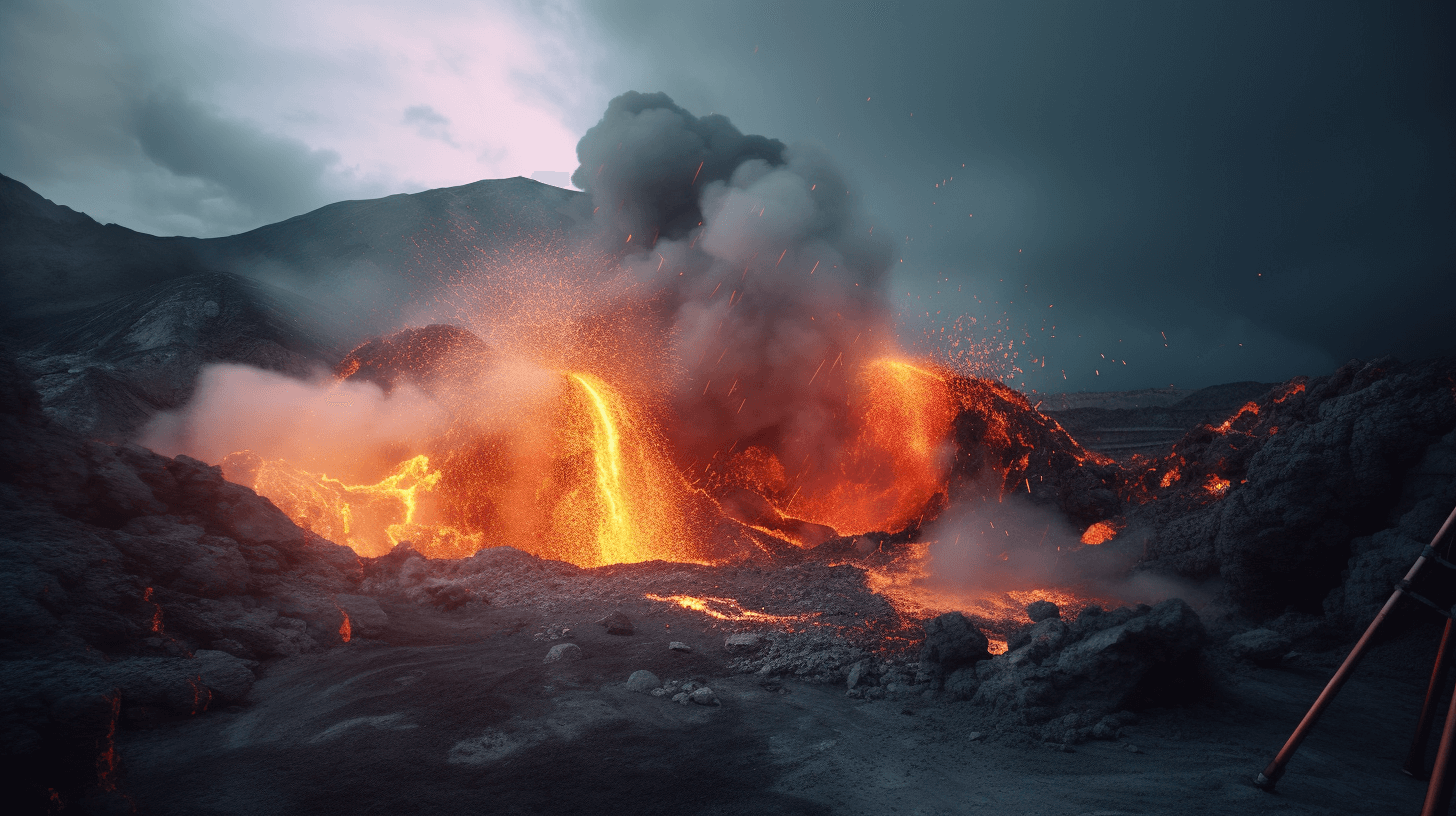



Ho brah, lissen up! Five years ago, on top May 3, 2018, Ikaika Marzo wen announce one big kine eruption on top Facebook Live. Was right dea on Mohala Street inside Leilani Estates. Da first of 24 cracks start spewing out lava like one volcano luau. Dis was da historic 2018 Kilauea eruption down in Lower Puna. ???
Marzo, one local boy from Kalapana and lava tour operator, wen take on top da big kuleana of telling Lower Puna peeps all da latest scoops. He wen show us where da streets cracking and all da otter important info, live action.?♂️??
His message to da kama’aina was clear: evacuate now. His updates during da almost four-month-long eruption stick in our minds as one reminder of da disaster that wen cause estimated $296 million in home losses and $236.5 million in damage to public stuff. ???
Now, as da five-year anniversary of da Lower East Rift Zone eruption stay coming up, Marzo standing by his pickup truck in da parking lot at da Woodland Center gas station in Pahoa. He just wen grind one quick kaukau. Behind his truck get one trailer loaded with one small Komatsu excavator for his new gig, Ohana Excavation and Landclearing. His ohana wen start dis business in November 2021 fo take advantage of da building boom in Puna afta his tour company had to shut down during da COVID-19 pandemic. ???♂️
“We stay plenty busy,” he wen say. ??️?
Marzo, 39, wen help organize Pu‘uhonua o Puna, also known as “Da Hub,” in one empty lot at one busy intersection in Pahoa town. Dis place wen become one haven for da 3,000 people first displaced by da eruption. Had hot meals, food, household supplies, important info, and good company. His high profile during da disaster wen help his run for Hawaii County mayor in 2020, but he came second to Mitch Roth in da general election.?️??
“Even though had one massive, historic eruption in 2018, still get plenty people moving into Lower Puna, and our community stay different from five years ago,” he wen say. “Now we get new people moving in who no even know what really happened in da 2018 eruption and can’t even fathom how severe that eruption was. It’s just little different.” ??????
According to da local ohana, many of da new kama’aina afta da eruption was part of a wave of mainlanders who decided to work remotely from Hawaii during da pandemic. Also had local peeps who couldn’t afford da high prices in other parts of da state. ???️
“Puna is still da last frontier of da whole archipelago. Still one of da cheapest places fo buy land,” Marzo wen say before he drive off to one work site. ?️??
Leilani Estates, da ground zero for da 2018 eruption, still get buyers even with its recent history. Lava wen flood da lower part of da big rural subdivision with 1-acre lots, and practically wipe out Kapoho Vacationland, Lanipuna Gardens and Kapoho Beach Lots. ???️
“I personally had one listing dat was right in front of Fissure 8, and we sold it,” Hilo Bay Realty owner and principal broker Ed Torrison wen say. Dis was about da eruption’s main vent, now called Ahuailaau, which wen spit out 260-foot-high lava fountains and super strong flows. ???
Bout 1,139 peeps were living in da subdivision during da 2020 census. “Da upper half of Leilani Estates dat’s still there is beautiful, with paved roads and native forest and all dat,” said Torrison, who get seven active listings in da subdivision. ??️?
Da pandemic “was a game-changer, with non-stop people from da mainland who wanted to leave da city and get away from da shootings and da horrible weather,” he said. ?️?️?
Data from Title Guaranty Hawaii show that in da four years after da eruption, from 2019 to 2022, da Puna region reported 11,238 residential and agricultural property transactions. Sales wen peak in 2021. Almost 70% of those sales involved Hawaii buyers, while Californians accounted for 10% of buyers, da biggest out-of-state group. ???
During da same four-year period, Leilani Estates had 411 property transactions, 257 of them, or about 62%, involved Hawaii buyers. Only 10 of those buyers were not from the Big Island, the data shows. In the first two months of 2023 alone, the subdivision recorded 51 sales. ???️
Even da hardest-hit subdivisions of Kapoho Beach Lots, Kapoho Vacationland and Lanipuna Gardens getting buyers, with 60 property transactions combined in 2022, and 51 sales in January and February, according to Title Guaranty Hawaii. ?️??
“If da price is right, just like any commodity, and da buyer sees value, they’ll buy,” Torrison said — even when denied home insurance because the properties lie in highest-risk Lava Hazard Zones 1 and 2. “It’s still the most affordable place in the state.” ???
He gave a sample of eight home sales in Leilani Estates from Jan. 1 to April 20 for a median price of $338,000, 64% higher than during the same period in 2018, before the eruption, but still well below home prices outside Puna. ?️??
The Pahoa broker said he’s sold real estate through three eruption cycles — Kalapana in 1990, the 2014 flow that threatened Pahoa and the 2018 Lower Puna disaster — and is not surprised that people are willing to buy in known hazard areas. ???♂️
“Everybody thinks they’re going to second-guess what Madame Pele is going to do, and that’s just the risk that they take,” he said. ???
To limit future losses in areas affected by the 2018 Lower East Rift Zone eruption, Hawaii County has been processing applications for its Voluntary Housing Buyout Program, funded by approximately $107 million in U.S. Department of Housing and Urban Development Community Development Block Grant disaster recovery funds. ??️?♂️
Dis housing buyout program, launched in April 2021, is da first of its kind in Hawaii, though similar kine programs been offered in flood-prone communities on da mainland. Priority is being given to lower-income households, with a maximum award of $230,000 for primary and secondary residences and $22,000 for undeveloped properties. ???
As of April 12, 787 applications for buyouts had been submitted, 243 of which have already closed at a total cost of $47.36 million, according to the county Planning Department’s disaster recovery team, which is administering the program. The first payment was in late June, with average buyouts so far of $194,878. ?️??
Beyond helping property owners move past the disaster, the program’s main goal is to clear out areas prone to lava flows and keep the lots as open space to avoid future losses. Eligible properties include those inundated or isolated by the eruption, damaged by fire caused by lava or subjected to secondary effects such as heat or gases. ???
Recovery team spokesperson Jennifer Myers said there are ongoing discussions on how to best utilize the purchased properties. Options being talked about include preserving cultural sites, transferring titles to land stewardship groups or leasing lands for agricultural uses that require a minimal investment in crops and infrastructure. ???
“At this time, we’re still working with the community and local leadership to decide how to proceed, but it’s a challenge because it isn’t one contiguous swath of land, but rather a checkerboard of properties across the eruption area,” Myers said in an email. ???️
Da payment Noah and Shantel Friend received from the program provided some financial security and helped pay for their new home in Ainaloa just outside Pahoa. After evacuating their former residence on Moku Street in Leilani Estates at the start of the eruption, they returned a few days later to find a 10-foot-wide crack running 500 feet through their backyard and beneath their house. ???
Shantel Friend, 36, said her husband get other family members who have lived in the subdivision for decades, and the couple had envisioned eventually passing their home on to their two children, now 17 and 16. She said they moved quickly to get a U.S. Department of Agriculture rural home loan to purchase the Ainaloa property in September 2018 but didn’t apply for a county buyout of their Leilani Estates property until several months after the program was announced. ??????
“It was a tough decision because we raised our children there for the past 13 years,” she said. “It was hard, but once we did the inspection, it was unlivable because of the cracks, and it was even more impossible to live there because my children have asthma.” ?️??
Friend, a cafeteria baker at Pahoa High & Intermediate School, said she found it difficult the first couple of years after the eruption to visit family still living in Leilani Estates because “it was too much memories.” ???
“We’ve managed to move forward because the most important things were our health and safety; materialistic things didn’t really matter to us,” she said. “So we were able to easily move forward knowing everyone was safe and healthy. But it was sad that we had to lose our property.” ???
But, das life in da Puna, yeah? Always moving, always changing. Sometimes hard, sometimes beautiful. Like da land itself, we gotta adapt, grow, and find ways fo’ continue. Like da lava, we gotta flow. ???
So, here we are, five years afta da big eruption. Life no stop. Puna no stop. We keep going, keep building, keep living. ?️?️?
Da mana of da ‘aina is strong, and da people even stronger. Puna still remains da last frontier of da whole archipelago, still one of da cheapest places fo’ buy land. ??️?
Even though get plenty new faces, da community spirit still stay strong. We still remember da eruption, still remember da loss, but we also remember da strength, da resilience, da aloha. ???
Even though was a massive, historic eruption in 2018, there’s still plenty people moving into Lower Puna. Our community has changed from five years ago. Now we get new people moving in who don’t even know what really happened in da 2018 eruption and don’t even fathom how severe that eruption was. But that’s okay, we welcome them with open arms, teach them about our history, our culture, our way of life. ???
So, as we mark dis five-year anniversary, we remember da past, but look forward to da future. We remember da destruction, but also da creation. We remember da loss, but also da gain. We remember da pain, but also da healing. ???
We remember, and we move forward. Together, as one ohana. ???
And as we say in da islands, “No worry, be happy.” Cause even afta da worst volcano, da sun still rise, da birds still sing, and da aloha spirit still live. ???
So, here’s to da next five years, and da next, and da next. Here’s to Puna, to Hawaii, to us. ???
Malama pono, Puna. A hui hou. ???
NOW IN ENGLISH
?✋Five Years After Kilauea Eruption, Hawaii Island Continues to Stand Strong??️
Hey there, listen up! Five years ago, on May 3, 2018, Ikaika Marzo announced a significant eruption on Facebook Live. It was right there on Mohala Street within Leilani Estates. The first of 24 fissures started spewing lava, marking the historic 2018 Kilauea eruption in Lower Puna. ???
Marzo, a local from Kalapana and a lava tour operator, took on the responsibility of informing the people of Lower Puna about the latest developments. He showed us where the streets were cracking and other crucial information, all live.?♂️??
His message to the locals was clear: evacuate now. His updates during the nearly four-month-long eruption are ingrained in our minds, a reminder of the disaster that caused an estimated $296 million in home losses and $236.5 million in damage to public infrastructure. ???
Now, as the five-year anniversary of the Lower East Rift Zone eruption approaches, Marzo stands by his pickup truck in the parking lot at the Woodland Center gas station in Pahoa. He just had a quick bite to eat. Behind his truck is a trailer loaded with a small Komatsu excavator for his new job, Ohana Excavation and Landclearing. His family started this business in November 2021 to take advantage of the building boom in Puna after his tour company had to shut down during the COVID-19 pandemic. ???♂️
“We are very busy,” he said. ??️?
Marzo, 39, helped organize Pu‘uhonua o Puna, also known as “The Hub,” in an empty lot at a busy intersection in Pahoa town. This place became a haven for the 3,000 people initially displaced by the eruption. It offered hot meals, food, household supplies, vital information, and good company. His high profile during the disaster helped his run for Hawaii County mayor in 2020, but he came second to Mitch Roth in the general election.?️??
“Even though we experienced a massive, historic eruption in 2018, many people continue to move into Lower Puna, and our community is different from five years ago,” he said. “Now we have new people moving in who aren’t aware of what really happened during the 2018 eruption and can’t even comprehend how severe that eruption was. It’s just a bit different.” ??????
According to the locals, many of the new residents after the eruption were part of a wave of mainlanders who decided to work remotely from Hawaii during the pandemic. There were also local people who couldn’t afford the high prices in other parts of the state. ???️
“Puna is still the last frontier of the entire archipelago. It’s still one of the cheapest places to buy land,” Marzo said before he drove off to a work site. ?️??
Leilani Estates, ground zero for the 2018 eruption, continues to attract buyers despite its recent history. Lava flooded the lower part of the large rural subdivision with 1-acre lots, and nearly wiped out Kapoho Vacationland, Lanipuna Gardens, and Kapoho Beach Lots. ???️
“I personally had a listing that was right in front of Fissure 8, and we sold it,” said Ed Torrison, owner and principal broker of Hilo Bay Realty. This was near the eruption’s main vent, now called Ahuailaau, which produced 260-foot-high lava fountains and powerful flows. ???
About 1,139 people lived in the subdivision during the 2020 census. “The upper half of Leilani Estates that’s still there is beautiful, with paved roads and native forest and all that,” said Torrison, who has seven active listings in the subdivision. ??️?
The pandemic “was a game-changer, with non-stop people from the mainland who wanted to leave the city and get away from the shootings and the horrible weather,” he said. ?️?️?
Data from Title Guaranty Hawaii show that in the four years after the eruption, from 2019 to 2022, the Puna region reported 11,238 residential and agricultural property transactions. Sales peaked in 2021. Almost 70% of those sales involved Hawaii buyers, while Californians accounted for 10% of buyers, the largest out-of-state group. ???
During the same four-year period, Leilani Estates had 411 property transactions, 257 of them, or about 62%, involved Hawaii buyers. Only 10 of those buyers were not from the Big Island, the data shows. In the first two months of 2023 alone, the subdivision recorded 51 sales. ???️
Even the hardest-hit subdivisions of Kapoho Beach Lots, Kapoho Vacationland, and Lanipuna Gardens are attracting buyers who are drawn to the area’s unique combination of affordability, natural beauty, and a sense of adventure. After all, owning land where lava once flowed, creating brand new earth, has its unique charm. ???
“In a way, it’s like living with history. You are part of a narrative that’s been ongoing for millions of years,” said a recent transplant from the mainland, who purchased land in Lanipuna Gardens. “I’m just a tiny speck in the grand scheme of things, and that’s humbling.” ??️?
However, living in the shadow of an active volcano also means understanding and accepting the risks associated with it. The eruption in 2018 was a stark reminder of the unpredictable nature of volcanoes, and the potential devastation they can cause. ?⛰️⚠️
“To live in Puna, you need to be prepared for anything. You need to have your go-bag ready, and you need to be mentally prepared to leave everything behind at a moment’s notice,” Marzo said. ???♀️
The resilience and adaptability of the Puna community are inspiring. Despite the challenges and the uncertainty, the community continues to grow and thrive, showing that life, indeed, can flourish even in the most challenging circumstances. “In Puna, we are not just surviving. We are living,” Marzo concluded, as the day’s work came to an end. ???
The story of Puna is a testament to the indomitable spirit of humanity, our ability to adapt and thrive in the face of adversity, and our deep connection with the earth and its powerful, ever-changing forces. ???
As the sun sets over the lava fields of Puna, painting the sky with hues of orange and purple, one can’t help but marvel at the resilience of nature and the human spirit. Indeed, here in the shadow of the volcano, life persists, and continues to bloom. ????