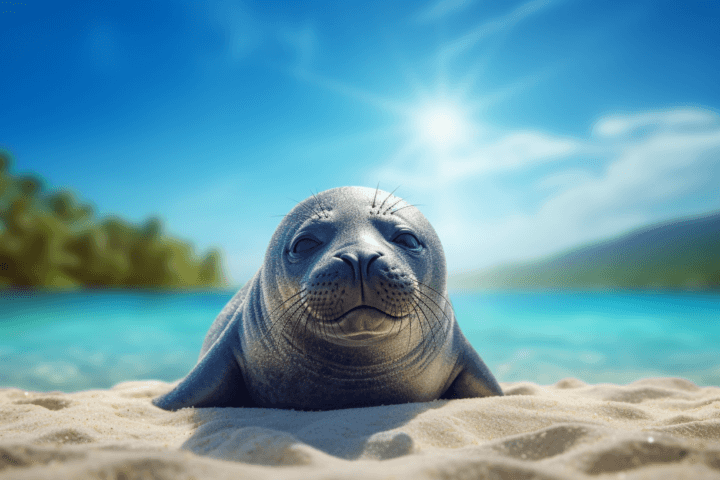



























One well-known Hawaiian monk seal from Molokai, wea stay looking sick, now stay getting care at one specialized hospital in Kailua-Kona. ???
Back in April, one community membah wen let wildlife officials know dat monk seal RL68, one wahine seal dat stay hanging out at da west-side beaches of Molokai, stay losing plenny weight and stay looking mo’ tired as da weeks go on. ⏰?️??
Da National Oceanic and Atmospheric Administration (NOAA) wit their nonprofit partnah, Hawaii Marine Animal Response on Molokai, wen decide fo’ step in an’ do one rescue operation. ???♂️?
Da day of da rescue operation, dem guys wen spot monk seal RL68 and den get help from da U.S. Coast Guard fo’ take her to da Marine Mammal Center’s Ke Kai Ola hospital fo’ monk seals. ????
Dr. Sophie Whoriskey, da center’s Hawaiian Monk Seal conservation veterinarian, wen say RL68 stay in one bad shape fo’ one 4-year-old seal and was getting worse fast, so da rescue wen happen right in time fo’ help her live. ????
Fo’ one endangered species like da Hawaiian monk seal, every patient mattahs. So dem guys stay thankful fo’ da community support and da partnahs fo’ acting fast fo’ give her da best chance fo’ go back to da ocean home. ????
Wit only around 1,500 left in da wild, Hawaiian monk seals stay one of da most endangered seal species in da world, an’ get protection from state and federal laws. ????
It’s also da peak time fo’ baby seals, and NOAA Fisheries stay recommend keeping one distance of at least 150 feet from monk seal mamas and their babies, both on land and in da water. Fo’ oddah seals, NOAA recommend stay 50 feet away. ?️???
Da mamas stay protective of their babies, and mo’ likely fo’ act up around them. They can — an’ have — bitten humans if they tink dey stay threat. ?♀️????
While Hawaiian monk seal Kaiwi stay nursing her baby at Kaimana Beach on Oahu, NOAA stay recommend da public use oddah beaches. ?️???
Kalaupapa National Historical Park in late April wen announce da arrival of their first monk seal baby, wit photos posted to Facebook. One beachgoer wen let da park’s marine ecologist know. Park officials also remind da public fo’ give da mama and baby plenny space. ??️???
Monk seal RL68, meanwhile, stay getting bettah at da center, wea dey stay giving her one diet wit plenny calories from sustainably caught herring, plus fluids fo’ help her hydration an’ medications fo’ gastroenteritis. ?️???
Da veterinary team wen take X-rays and wen submit blood samples fo’ check fo’ signs of disease, but going take couple weeks fo’ get da results. Wen she ready, da officials goin’ take her back to Molokai. ????
Since 2014, da center wen rehabilitate and release 40 monk seals, most of dem wen get rescued from and returned to da Northwestern Hawaiian Islands in partnership wit NOAA. ???️?
Fo’ report monk seal sightings or sick animals, call NOAA’s marine wildlife hotline at 888-256-9840. ???⚕️?
NOW IN ENGLISH
??⚕️ Famous Molokai Monk Seal Receives Treatment for Illness ?
A well-known Hawaiian monk seal from Molokai, who appeared sick, is now receiving care at a specialized hospital in Kailua-Kona. ???
In April, a community member first alerted wildlife officials that monk seal RL68, a female frequently found on Molokai’s west-side beaches, was losing a lot of weight and seemed to be losing energy as weeks went by. ⏰?️??
The National Oceanic and Atmospheric Administration (NOAA) and their nonprofit partner, Hawaii Marine Animal Response on Molokai, decided to intervene and initiated a rescue operation. ???♂️?
On the day of the rescue operation, they spotted monk seal RL68 and, with the help of the U.S. Coast Guard, transported her to the Marine Mammal Center’s Ke Kai Ola hospital for monk seals. ????
Dr. Sophie Whoriskey, the center’s Hawaiian Monk Seal conservation veterinarian, said RL68 was in poor condition for a 4-year-old seal and was deteriorating quickly, so the rescue happened just in time to save her. ????
For an endangered species like the Hawaiian monk seal, every patient matters. They are grateful for the community’s support and the partners’ quick action to give her the best chance to return to her ocean home. ????
With only around 1,500 left in the wild, Hawaiian monk seals are one of the most endangered seal species globally, protected by state and federal laws. ????
It’s also peak pupping season, and NOAA Fisheries recommends maintaining a distance of at least 150 feet from monk seal mothers and their pups both on land and in the water. For other seals, NOAA recommends staying 50 feet away. ?️???
Mothers can be protective of their pups, more likely to exhibit territorial behavior around them. They can — and have — bitten humans perceived as threats. ?♀️????
While Hawaiian monk seal Kaiwi is nursing her pup at Kaimana Beach on Oahu, NOAA recommends the public use other beaches. ?️???
Kalaupapa National Historical Park in late April announced the arrival of its first monk seal pup, with photos posted to Facebook. A beachgoer reported the pair to the park’s marine ecologist. Park officials also remind the public to give the mom and pup plenty of space. ??️???
Meanwhile, monk seal RL68 is showing improvement at the center, where they are providing her with a calorie-rich diet of sustainably caught herring, fluids to help her hydration, and medications for gastroenteritis. ?️???
The veterinary team took X-rays and submitted blood samples to check for signs of disease, but results will take several weeks. When she’s ready, officials will return her to Molokai. ????
Since 2014, the center has rehabilitated and released 40 monk seals, most of whom were rescued from and returned to the Northwestern Hawaiian Islands in partnership with NOAA. ???️?
To report monk seal sightings or sick animals, call NOAA’s marine wildlife hotline at 888-256-9840. ???⚕️?